


Please fill out this form with the required information


 Dec 03, 2025
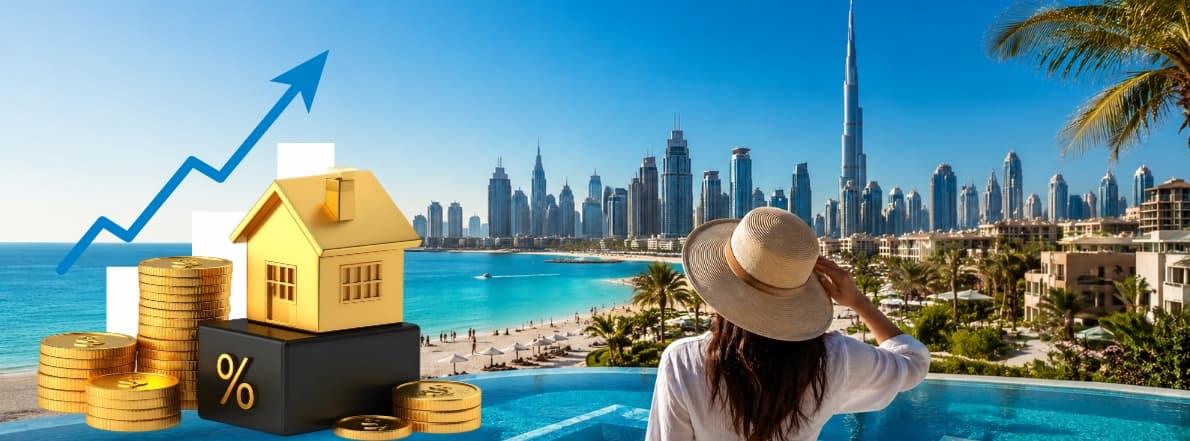
Dubai, Singapore, and London are not just popular cities for the thrilling vacation energy and shopping, but are also well-developed countries in every other way. In a similar sense, Real estate in these cities is a powerful economic aspect that drives growth by attracting investments, providing essential infrastructure, and creating various types of jobs. The stability in the real estate is the point at which the occupancy, income, and expenses of a property reach the market potential. While finding the best city among Dubai, Singapore, and London, in terms of Real estate stability, you need to go through a few aspects to compare. In this post, you will find all the essential information regarding the real estate stability in Dubai, Singapore, and London, so that you can choose the best option with high stability.
Dubai's real estate is one of the prominent aspects of the city's economic development, maintaining a stable reputation in the market. Moreover, the government of Dubai is working on another strategy to enhance the country's financial impact. According to the data for the first nine months of 2024, the Dubai real estate market recorded over 163,000 transactions, generating more than AED 544 billion during the period. There is also a substantial growth of over AED 376 billion during the mentioned time. With continuous growth reaching record levels, property speculation remains within desirable limits, not exceeding 20%, resulting in sustainable and stable investments in Dubai real estate.
To understand the stability of Dubai's real estate market, it is essential to consider several factors that directly or indirectly influence it. Here are some key factors that contribute to Dubai's real estate market, including the government's visionary strategies for location diversification:
Government Initiatives and Strategies
The government of the United Arab Emirates (UAE) has a clear vision for development that is supported by pro-investment government initiatives, which sustains confidence and decision-making. Within the UAE's 2030 strategy, the government is focusing more on a knowledge-based economy and sustainable development, laying a solid footing for real estate growth.
Tourism and Hospitality
As Dubai is one of the primary destinations for tourists, the tourism industry boosts property prices and rental demand for the millions of people who visit the city annually.
Economic Diversification
From oil dependency, Dubai has now shifted to tourism, technology, and finance, and due to this, the real estate has been a solid asset to the city. Due to the UAE's diversification strategy, there has been significant economic growth, which reduces dependency on the oil market and boosts property values in Dubai.
Infrastructure and Mega Projects
Investments in mega projects, such as Expo 2020, enhance property values and cause real estate market growth.
Golden Visa Program
The Golden Visa program set by the UAE government has attracted talent and many investors to Dubai, offering long-term residency. This program expanded the city's population, strengthening the real estate market.
Before deciding to invest in Dubai's real estate market, it is essential to understand that the market is more dynamic and volatile, which can lead to higher risk-adjusted returns. You must also consider factors such as location, demand, developer reputation, market trends, price cycles, and other relevant aspects.
The economy of Singapore has always been an open and competitive one globally, encompassing aspects such as property prices and rentals, including in the real estate sector. The real estate market of Singapore is expected to reach a value of about USD 2.07 trillion by 2025. In the Singapore real estate market, the residential segment dominates, with a value of around USD 1.56 trillion in the same year. Among all sectors, Singapore is experiencing a surge in luxury condominium sales due to high demand from foreign investors.
The government policies of Singapore play a significant role in maintaining the stability of Singapore's real estate market. Other factors that affect the stability of Singapore's real estate include the following:
Economic Growth and Property Demand
Economic stability and growth play a major part in the stability of real estate in Singapore, which includes the thriving property market. In 2025, Singapore boosts its economic outlook, coupled with strategic infrastructure developments, which help increase demand for commercial and residential properties in the country.
Infrastructure Developments
Singapore majorly focuses on urban transformation and connectivity, which is a significant factor that increases the property demand. The key infrastructure projects prepared for 2025 and beyond will increase property values and attract more buyers, meeting specific requirements.
Government Policies
There are rigorous government policies governing the Singapore property market. These policies are introduced to maintain stability and discourage speculative activity. Ensure you are familiar with all the new rules before buying a property in Singapore to understand the real estate landscape of the country.
Falling Interest Rates
Falling interest rates are a positive aspect for buyers purchasing property in Singapore in 2025. When rates drop, monthly mortgage repayments are smaller, allowing buyers to explore properties they may not have considered before. The cost of borrowing directly improves the affordability and unlocks the investment potential.
Before you get an idea about the real estate stability of Singapore and make a decision to invest, you must consider a few things. The major thing to know is the strict government policies and high taxes imposed on foreign buyers.
The real estate market of the United Kingdom shows stability. The investor sentiment is improving in a more constructive financial environment. The reason behind the stability in London's real estate is due to consistent demand, a strong legal framework, etc. Other than the short-term fluctuations related to the interest rates and challenges in the housing supply. The real estate of London is a substantial long-term investment. In September 2025, the average price of a house in the UK is about £271,531, and the index stands at 104.1. The prices have fallen by 0.6% compared to the previous month. However, there is a 2.6% rise compared to last year.
There are several key factors that contribute to the stability of the real estate market in London. Knowing the following assets for London real estate will help you understand more about the real estate market of London. Here are some major factors, including:
Investment
The value of real estate appears balanced in 2025, with the most commercial sectors reaching their peak values throughout the previous year. Due to falling inflation, lower debt costs will support the improved investment returns and boost increased real estate transactions within the following year.
Sustainability
Due to the rise of the new government and the nearing of net-zero targets, 2025 will be key in the UK's real estate transition to net zero. It is expected that there will be a reset of the sustainability-related policy. It will increase disclosure needs and strengthen the focus on transition and physical climate risk. This may require stakeholders to tighten their alignment on the sustainability objectives.
Industrial and Logistics
The occupier demand in 2025 is expected to remain broadly consistent with the levels observed in the same period. However, the vacancy rates are expected to stabilise, and moderate prime rental growth will be achieved for best-in-class assets. Positive investor sentiment and a broadening buyer pool will likely increase investment volumes, leading to a reduction in work.
Economic Outlook
A more stable rate of inflation is expected in 2025, which is broadly or slightly above the overall target. This meeting, with 100bps of base rate cuts, will result in positive growth of about 1.8% in government investment, which may come as a surprise. However, the changes to the National Insurance Contribution could increase the prices and reduce jobs.
Before you invest in the real estate market of London, you must know that the market is mature and grows more slowly. The recent tax hikes have increased costs and added uncertainty for developers. You must be aware that the primary reason is the extremely high property prices and affordability restrictions, which exacerbate market volatility and limit the local buyer base.
Conclusion
The real estate opportunities in Dubai, Singapore, and London are excellent and offer various investment options, along with some limitations. Among all the top real estate markets worldwide, Dubai, Singapore, and London have their own strong points that you can consider. Hence, you can compare the real estate stability among these three cities and choose the one that best suits your preferences. If you want the affordability, healthy ROI, and a future-looking investment, then the off-plan of Dubai could be the best opportunity for you. However, if you see other assets in the Singapore and London real estate markets, opt for the one that appears more beneficial and stable for you.




 Blog
Blog